Hormones and Aging: What Changes, When, and Why It Matters
Estrogen, testosterone, and progesterone all decline significantly with age. Understanding these shifts and the evidence around managing them is one of the most nuanced areas of longevity medicine.

Hormones and Aging: What Changes, When, and Why It Matters
Of all the biological changes that accompany aging, hormonal decline is among the most consequential and among the most misunderstood. It's a topic surrounded by both excessive fear and excessive optimism, often with insufficient attention to what the peer-reviewed evidence actually shows.
This post aims to provide an honest overview: what changes, when it changes, what the downstream effects are, and what the research says about managing those effects.
The Hormones That Change Most With Age
Estrogen is the primary sex hormone in women, though men produce it in smaller amounts as well. In women, estrogen levels decline dramatically during perimenopause and menopause typically in the late 40s to early 50s, though the timing varies considerably. Estrogen plays roles in bone density, cardiovascular health, cognitive function, skin integrity, and mood regulation. Its decline is associated with a wide range of symptoms and long-term health risks.
Progesterone declines alongside estrogen in women, often beginning earlier in the perimenopausal transition. It plays important roles in sleep quality, mood stability, and uterine health.
Testosterone declines in both men and women with age. In men, the decline is gradual roughly 1-2% per year from the 30s onward and is sometimes called "andropause," though this term is not universally accepted in the medical literature. In women, testosterone (produced in smaller amounts) also declines, affecting libido, energy, and muscle maintenance.
DHEA (dehydroepiandrosterone), a precursor to both estrogen and testosterone, declines steeply with age in both sexes by some estimates, to about 20% of peak levels by the 70s.
Growth hormone and IGF-1 decline with age, contributing to changes in body composition, muscle mass, and recovery capacity.
What These Changes Affect
The downstream effects of hormonal decline are broad and interconnected.
Bone density is significantly affected by estrogen decline in women. The years immediately following menopause are associated with accelerated bone loss, increasing fracture risk. This is one of the most well-established consequences of hormonal aging and one of the primary drivers of osteoporosis in older women.
Cardiovascular health is influenced by estrogen's protective effects on the vascular system. Before menopause, women have significantly lower rates of cardiovascular disease than age-matched men. After menopause, that gap narrows substantially.
Cognitive function is affected by both estrogen and testosterone. Estrogen has neuroprotective effects, and its decline is associated with changes in memory and cognitive processing speed. The relationship between hormonal decline and dementia risk is an active area of research.
Muscle mass and body composition are affected by testosterone decline in both sexes. Testosterone supports muscle protein synthesis, and its decline contributes to the sarcopenia age-related muscle loss that accelerates in later decades.
Sleep quality is significantly disrupted by hormonal changes, particularly in women during perimenopause and menopause. Hot flashes and night sweats are the most obvious mechanisms, but hormonal effects on sleep architecture are broader than that.
Mood and psychological wellbeing are influenced by all three major sex hormones. The perimenopausal transition is associated with increased rates of depression and anxiety, even in women with no prior history of mood disorders.
The Evidence on Hormone Therapy
This is where the science becomes genuinely complex and where honest communication matters most.
For women, hormone therapy (HT) has a complicated history. The Women's Health Initiative (WHI) study, published in 2002, reported increased risks of breast cancer, cardiovascular disease, and stroke in women taking combined estrogen-progestin therapy. This led to a dramatic decline in HT use.
Subsequent analysis has substantially revised that picture. The WHI findings were most applicable to older women (average age 63) who started therapy more than a decade after menopause. For women who begin hormone therapy in their 50s, close to the onset of menopause the "timing hypothesis" or "window of opportunity" the risk-benefit profile appears considerably more favorable. Current evidence suggests that for healthy women under 60 or within 10 years of menopause onset, the benefits of HT for symptom relief, bone protection, and potentially cardiovascular health may outweigh the risks for many women.
The type of hormone therapy matters as well. Bioidentical hormones, transdermal delivery routes, and the choice of progestogen all affect the risk profile. This is a rapidly evolving area of the literature.
For men, testosterone replacement therapy (TRT) has a similarly complex evidence base. It clearly improves symptoms of hypogonadism clinically low testosterone including energy, libido, muscle mass, and mood. The evidence for benefits in men with age-related testosterone decline (as opposed to clinical hypogonadism) is less clear, and concerns about cardiovascular risk, though largely resolved by more recent data, have not entirely disappeared from the literature.
The bottom line on hormone therapy for both sexes: it's a highly individualized decision that depends on symptom burden, baseline health, timing, and personal risk tolerance. It requires a knowledgeable clinician and ongoing monitoring. It is not a simple anti-aging intervention, but it is also not the danger it was once portrayed to be for appropriately selected patients.
What Doesn't Require a Prescription
Several lifestyle factors influence hormonal health and are supported by peer-reviewed evidence.
Resistance training supports testosterone levels in both sexes and is the most evidence-based intervention for preserving muscle mass in the context of hormonal decline.
Sleep is essential for hormonal regulation. Growth hormone is released primarily during deep sleep. Testosterone production is significantly impaired by chronic sleep insufficiency. The relationship between sleep and hormonal health is bidirectional and important.
Body composition matters. Excess visceral fat is associated with lower testosterone in men (through aromatization of testosterone to estrogen) and with hormonal disruption more broadly. Reducing visceral fat through diet and exercise has measurable effects on hormonal profiles.
Stress management affects the HPA axis and cortisol, which in turn affects sex hormone production. Chronic stress is genuinely disruptive to hormonal balance.
The Nuance That Matters
Hormonal aging is not a simple story of decline and replacement. The timing of intervention, the type of therapy, the individual's health context, and the specific hormones involved all matter enormously. The research is evolving, and honest clinicians will acknowledge uncertainty where it exists.
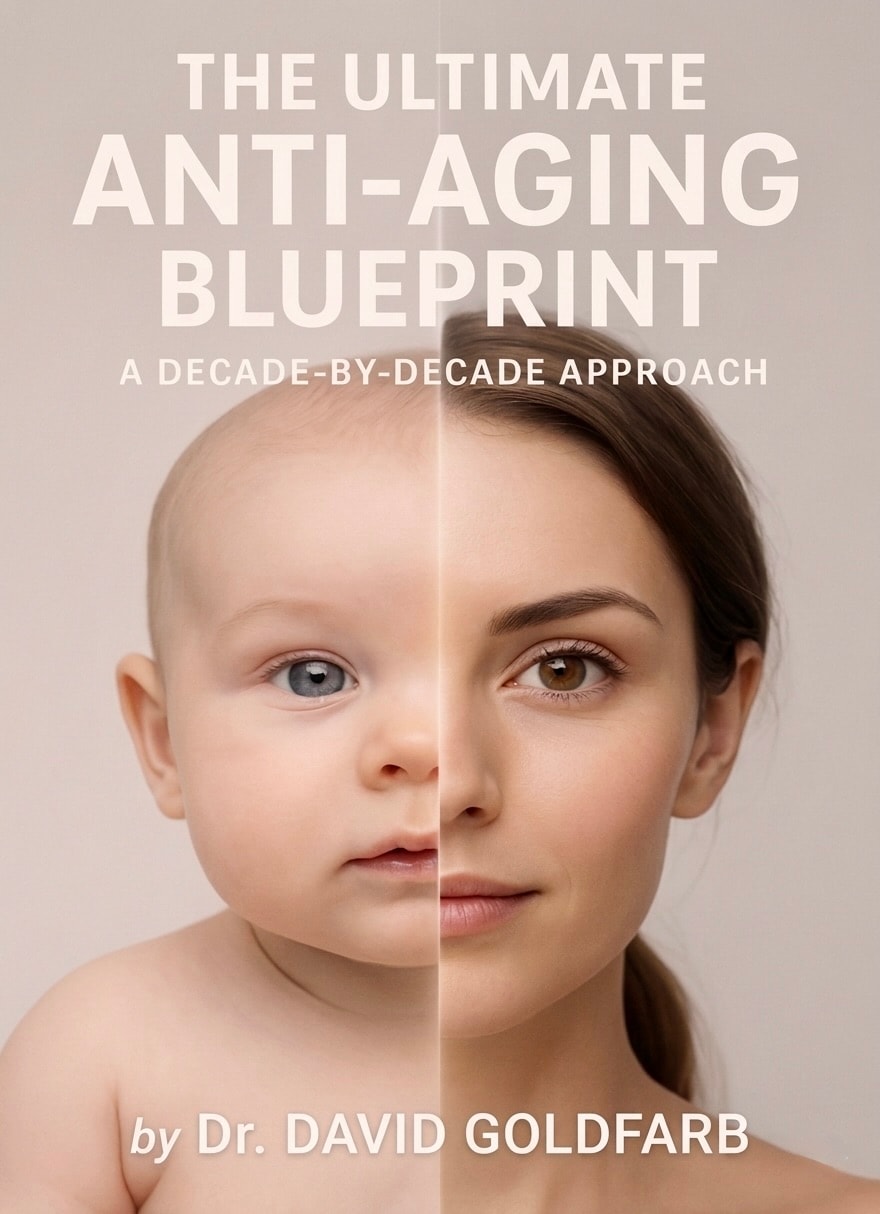
The Ultimate Anti-Aging Blueprint covers hormonal changes across each decade from the early shifts of the 30s through the dramatic transitions of the 50s and the management challenges of the 70s and beyond with a commitment to representing the evidence accurately, including its limits.
Explore Topics
Written by
Dr. Goldfarb
Content creator and writer sharing insights and stories.