Longevity in Your 30s: Why Now Is the Most Important Decade
The choices you make in your 30s have a compounding effect on how you age. Here's what the science says about building a foundation that pays dividends for decades.

Longevity in Your 30s: Why Now Is the Most Important Decade
Most people in their 30s aren't thinking about aging. They're busy careers, relationships, children, mortgages. Aging feels like something that happens to other people, later.
This is understandable. It's also a missed opportunity.
The 30s are, from a longevity science perspective, arguably the most important decade. Not because the most dramatic changes are happening they're not but because the choices made now have the longest runway to compound. The habits built in your 30s will shape your biology in your 50s, 60s, and beyond in ways that are genuinely difficult to reverse later.
What's Actually Happening in Your 30s
The biological changes of the 30s are subtle but real.
Peak muscle mass typically occurs in the late 20s to early 30s. After that, without deliberate intervention, the slow process of sarcopenia age-related muscle loss begins. The rate is gradual at first: roughly 1% per year. But it accelerates in later decades, and the starting point matters enormously.
Metabolic rate begins a slow decline. The mechanisms are complex, but reduced muscle mass plays a significant role muscle is metabolically active tissue, and less of it means fewer calories burned at rest.
Cardiovascular risk factors begin accumulating silently. Blood pressure, cholesterol, blood glucose, and inflammatory markers can all be trending in the wrong direction for years before they cross clinical thresholds. The 30s are when these trends often begin.
Hormonal shifts are beginning, though they're not yet dramatic. Testosterone in men begins a gradual decline from peak levels. Women in their late 30s may begin to notice the early hormonal fluctuations that precede perimenopause.
Epigenetic aging is underway. Your biological age as measured by epigenetic clocks may already be diverging from your chronological age, in either direction, depending on your lifestyle.
The Compounding Principle
Here's the core insight that makes the 30s so important: biological aging is not linear. It compounds.
A person who builds strong cardiovascular fitness in their 30s doesn't just have a healthier heart at 35. They have a larger reserve to draw on when the natural declines of the 40s and 50s arrive. They're starting from a higher baseline.
Conversely, a person who spends their 30s sedentary, sleep-deprived, and chronically stressed isn't just less healthy at 35. They're accelerating processes telomere shortening, mitochondrial decline, inflammaging that will have measurable consequences a decade or two later.
The choices you make in your 30s are not just about how you feel now. They're investments in who you'll be at 55.
What the Research Prioritizes
Resistance training is the single most important physical investment of the 30s. Building and preserving muscle mass now creates a buffer against the sarcopenia that accelerates in later decades. The research is consistent: people who maintain muscle mass into their 60s and 70s have dramatically better functional outcomes mobility, independence, metabolic health than those who don't.
Cardiovascular fitness matters alongside it. VO2 max the maximum rate at which your body can use oxygen during exercise is one of the strongest predictors of longevity in the literature. Building aerobic capacity in your 30s creates a reserve that pays dividends for decades.
Sleep is not optional. Chronic sleep insufficiency in the 30s accelerates virtually every aging mechanism discussed in this blog telomere shortening, inflammaging, mitochondrial dysfunction, hormonal disruption. The research on sleep and longevity is unambiguous.
Metabolic health deserves attention even if you feel fine. Getting baseline labs fasting glucose, HbA1c, lipid panel, inflammatory markers in your 30s gives you a reference point and an early warning system. Many of the metabolic conditions that cause serious problems in the 50s and 60s are detectable and reversible in the 30s.
Stress management is biological, not just psychological. Chronic psychological stress activates inflammatory pathways, disrupts sleep, and accelerates telomere shortening. Building genuine stress management practices in your 30s not just coping mechanisms, but actual recovery is a longevity investment.
What Not to Worry About
The 30s are not the time for aggressive supplementation, extreme dietary restriction, or elaborate biohacking protocols. The evidence base for most of those interventions is thin, and the fundamentals sleep, movement, nutrition, stress, social connection have far more robust support.
The 30s are a time to build habits, not optimize edge cases.
The Bigger Picture
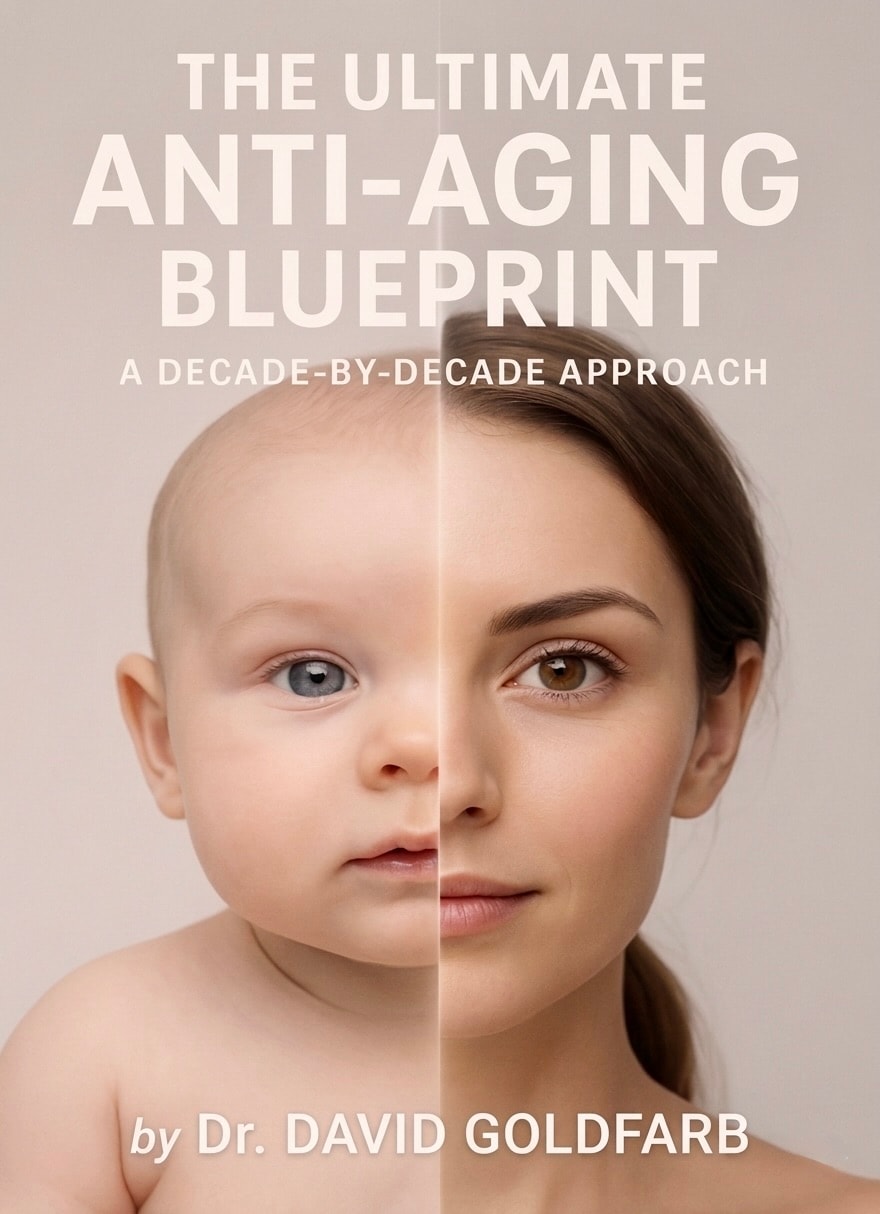
The Ultimate Anti-Aging Blueprint dedicates a full chapter to the 30s, covering the specific biological changes of this decade, the lab tests worth getting, and the evidence-based priorities that will matter most in the decades ahead.
The goal isn't to live in fear of aging. It's to understand that you have more control than you think and that the best time to exercise that control is now.
Explore Topics
Written by
Dr. Goldfarb
Content creator and writer sharing insights and stories.